
🇱🇰 Need a Bulk Order? 📦 Custom Sri Lankan Products ✨ Personalized Shipping Quotes 💬 Chat with Us


Ceylon Mace: Nutmeg’s Sophisticated Sister Most Cooks Have Never Tasted
The bright red-orange lacy web hiding around every nutmeg seed — hand-picked at peak ripeness from Sri Lanka’s nutmeg groves, sun-dried whole, and almost never found this way in any supermarket. Lighter than nutmeg. More floral. More citrus. The professional kitchen secret you have been missing.
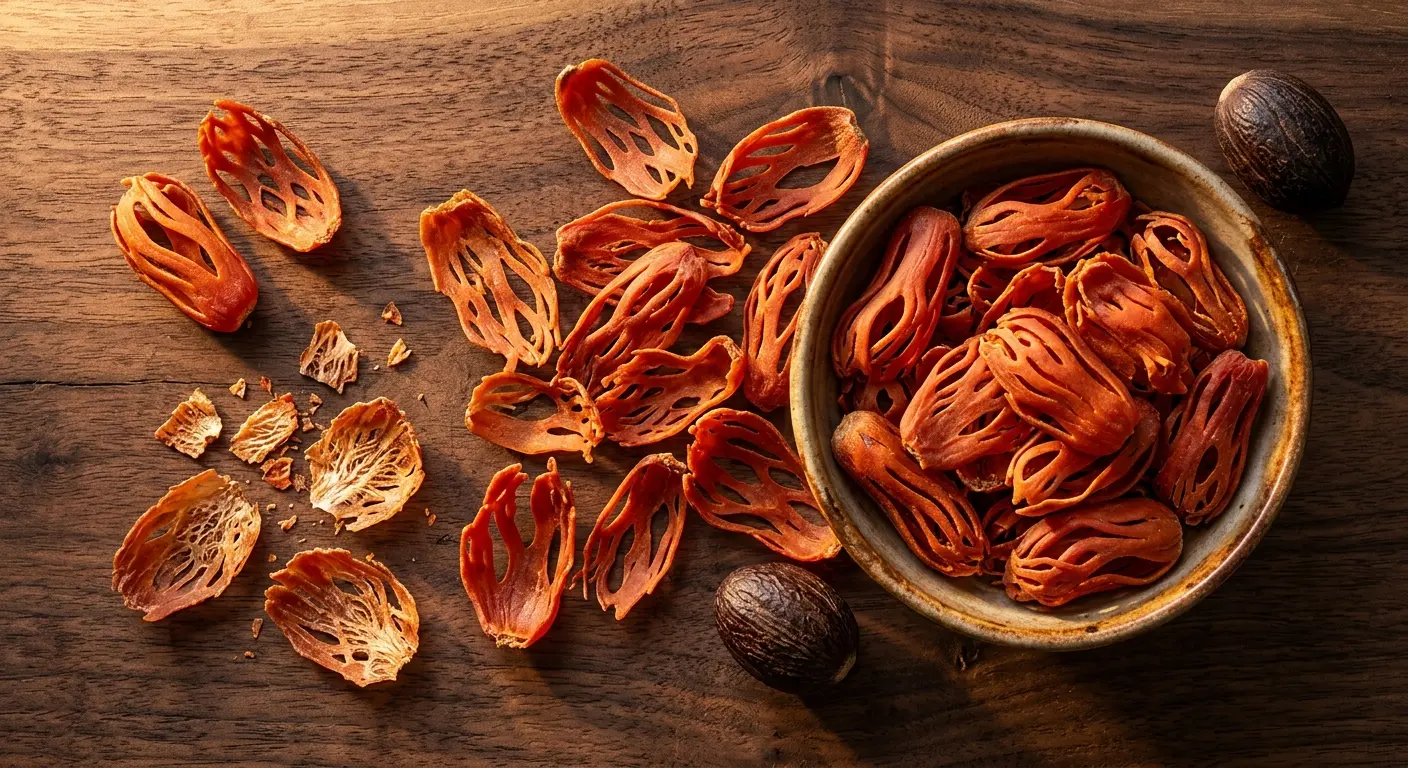
There is a spice that ninety percent of home cooks have heard of but never actually used. It hides in plain sight on the back label of nutmeg jars, mentioned in old French cookbooks, referenced in passing by chefs on cooking shows — and yet almost nobody has ever held a whole piece of it in their hand. That spice is mace.
Mace is not a separate plant. It is not a synonym for nutmeg. It is the bright red-orange, lacy, web-like membrane (botanically called an aril) that wraps tightly around the nutmeg seed inside its fruit. When the fruit is harvested, this delicate netting is carefully peeled away by hand, then dried — fading from vivid red to a warm orange-amber as it dries — and sold as “mace blades”: irregular, papery, intricately patterned pieces unlike anything else in the spice world.
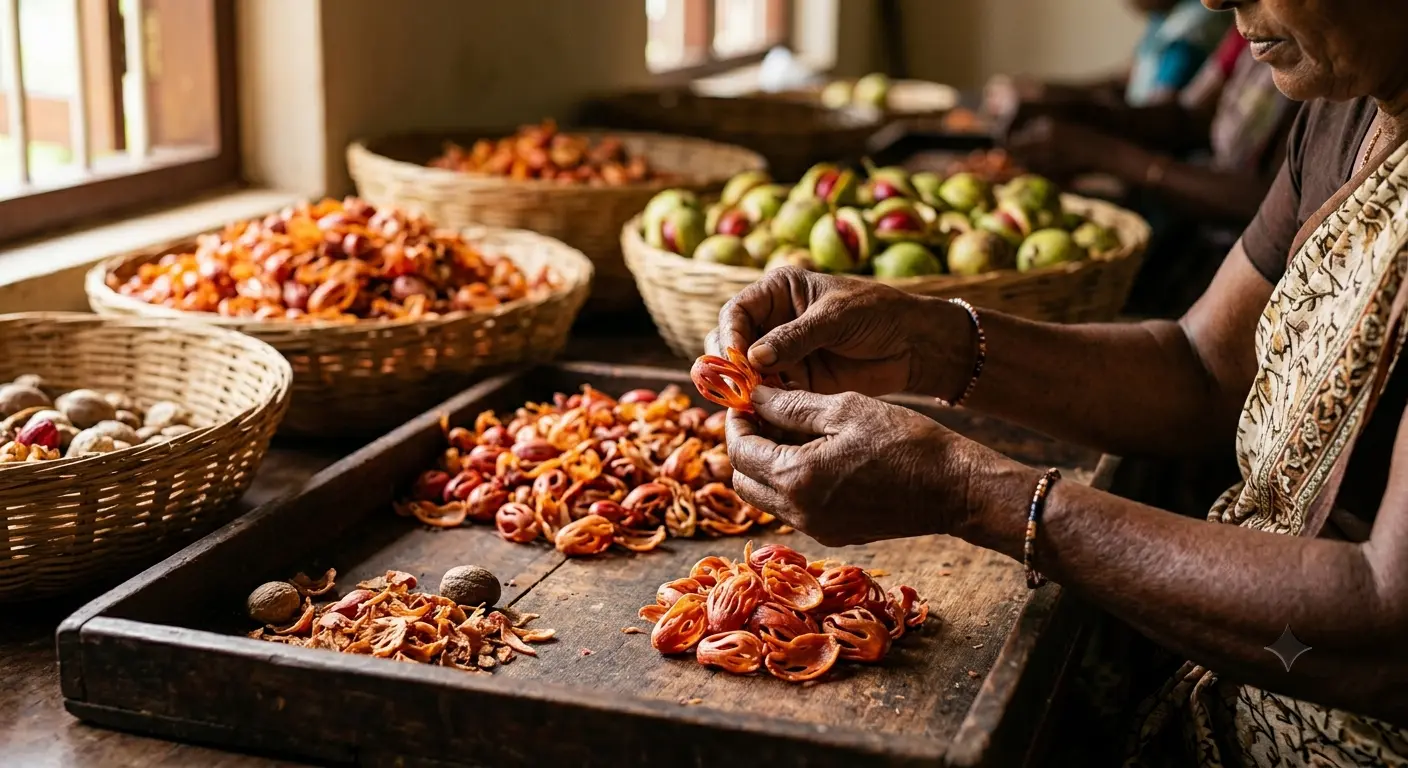
Most people who have tasted mace have only encountered it pre-ground, sitting stale in a jar for months or years. Zeylaan Ceylon Mace Grade No.1 is the whole blade — hand-picked from Sri Lanka’s lush nutmeg groves, sun-dried to preserve every drop of essential oil, and shipped to you intact and alive with the floral, citrus-bright character that defines true mace.
| No.1 Highest Quality Grade | 100% Certified Organic | ~2 yrs Shelf Life (Whole Blades) | 4 Sizes: 250g–1kg | 28+ Countries Shipped To |
What Is Mace? The Complete Answer
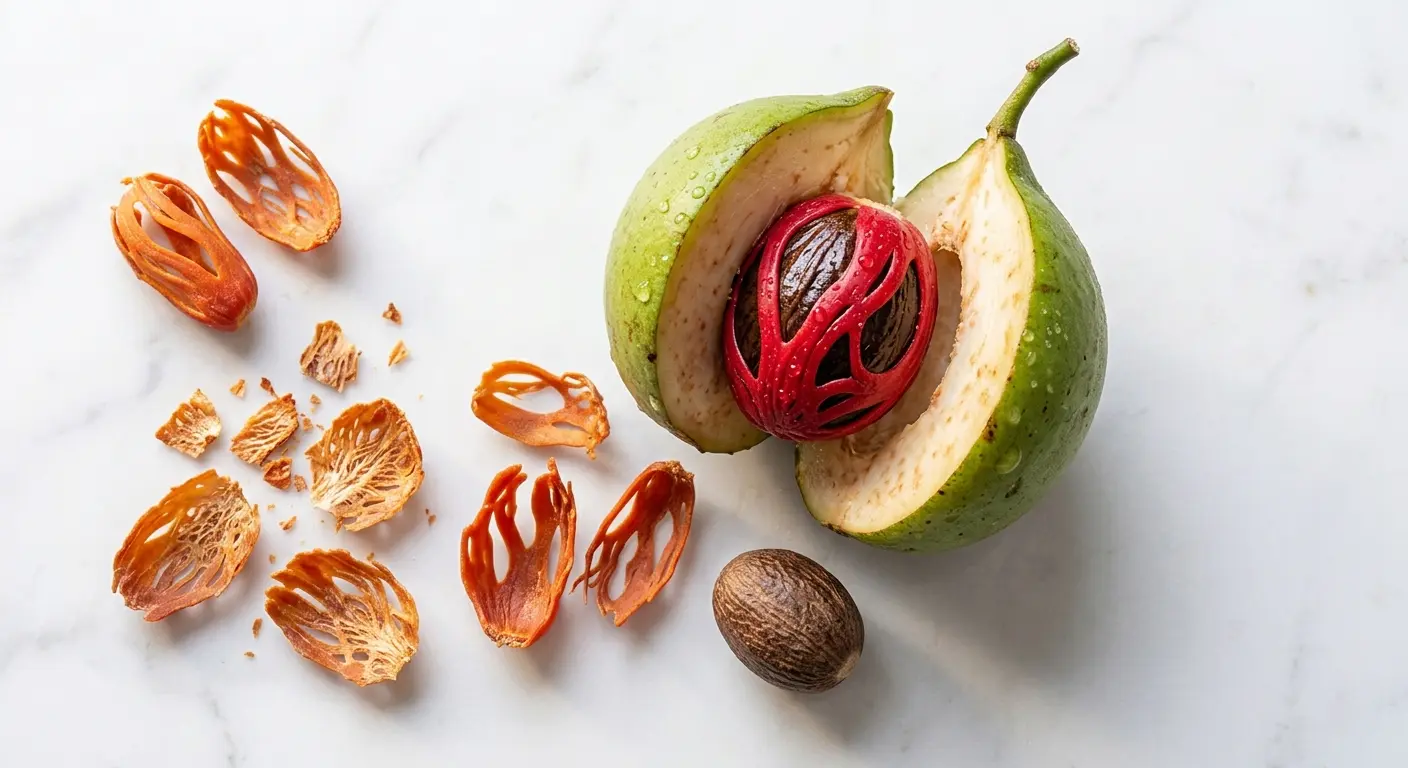
Mace (Myristica fragrans aril) grows on the same tropical evergreen tree that produces nutmeg — native to Indonesia’s Banda Islands, now also flourishing in Sri Lanka’s humid forest farms. The tree produces a fleshy yellow-green fruit; when it splits open at maturity, it reveals a hard brown seed (the nutmeg) wrapped in a brilliant crimson lattice (the mace).
Botanically, this means nutmeg and mace are two entirely different spices that happen to come from the exact same fruit — a genuinely rare phenomenon in the plant world. The closest comparison: an orange’s flesh versus its peel. Both come from the same fruit, but they taste, smell, and behave completely differently once dried and used in cooking.
Once peeled away from the seed, the fresh red aril is carefully flattened and dried — usually over several days — during which its colour shifts dramatically from vivid scarlet-red to the warm orange-amber-gold that characterizes dried mace blades. This is the form Zeylaan ships: whole, unbroken blades that retain their lacy structure and, crucially, the essential oils that make mace genuinely special.
| Why mace history matters: During the 17th century, mace and nutmeg together were among the most fiercely contested commodities on earth. The Dutch East India Company fought wars and committed atrocities to monopolies control of the tiny Banda Islands where both spices originated — at one point, mace was literally worth more than its weight in gold across European markets. It remains one of the rarest and most historically significant spices in culinary history, even though it has faded from everyday Western kitchens. |
Mace vs Nutmeg: The Definitive Comparison Every Cook Needs
“Mace vs nutmeg” is the single most important question to answer before using either spice well. They are frequently treated as interchangeable — and while they can substitute for each other in a pinch, doing so without understanding the difference leads to real culinary missteps: bitterness in béchamel, cloying heaviness in spiced cakes, or a flat finish in braises where mace’s brightness was actually needed.
| 🌺 Mace (The Aril) Lighter, brighter, more delicate Floral with citrus, pine, and black pepper notes Slightly sweet, almost never bitter Papery, fine texture — disperses without clumping Best for: cream sauces, custards, light bakes, shellfish, delicate dishes Less commonly available — rarely found whole on supermarket shelves | 🌰 Nutmeg (The Seed) Denser, earthier, more dominant Warm, woody, sweet, slightly resinous Can turn bitter or overwhelming in excess Oily, dense texture — requires more grinding force Best for: eggnog, pumpkin spice, heavier bakes, gravies, robust dishes Widely available, commonly stocked everywhere |
| Dimension | Mace | Nutmeg |
| Plant Part | Lacy aril (membrane) around the seed | Inner seed kernel |
| Colour (Dried) | Orange-amber-gold | Warm brown |
| Essential Oil Content | 7–14% (monoterpene-dominant) | Variable, myristicin/elemicin-dominant |
| Flavour Profile | Floral, citrus, pine, peppery, bright | Sweet, woody, warm, earthy |
| Heat Tolerance | Turns bitter if overcooked — finishing spice | More heat-stable, used throughout cooking |
| Best Pairing | Cream, dairy, fish, light desserts | Spiced bakes, eggnog, heavier dishes |
| Rarity | Genuinely rare whole — professional kitchens favour it | Common, widely stocked |
| Price | Typically, higher than nutmeg | More affordable |
| Substituting mace for nutmeg (or vice versa): If a recipe calls for nutmeg and you only have mace — or vice versa — start by replacing half the quantity (e.g. 1 tsp nutmeg → ½ tsp nutmeg + ½ tsp mace) rather than a full 1:1 swap. Mace’s brightness can overwhelm a dish if used at full nutmeg quantities; nutmeg’s earthiness can flatten a dish that was designed for mace’s lift. Always use freshly ground for either, and taste as you go. |
Mace Around the World: Names in Every Language
| FRENCH Fleur de Muscade | GERMAN Muskatblüte | HINDI Javitri | SPANISH Macia / Maci |
| PORTUGUESE Macis | MANDARIN Dòu Kòu Shū | ARABIC Basbasa | JAPANESE Mesu |
The French name fleur de muscade — “flower of nutmeg” — and the German Muskatblüte both reference the same visual observation that gave mace its European nickname centuries ago: its lacy, dried form resembling a wilted flower draped over the nutmeg seed.
Understanding Grade No.1: What Makes Ceylon Mace Exceptional
| 🏆 The Grade No.1 Ceylon Mace Standard ✅ Whole, Unbroken Blades Full lattice structure intact ✅ Deep Orange-Red Hue Indicates oil density and ripeness ✅ Hand-Inspected Every piece checked by touch and sight ✅ No Cracks or Fragments Damaged pieces excluded entirely ✅ Sun-Dried Only Not machine or force-dried ✅ Certified Organic Zero synthetic pesticides verified ✅ High Alpha-Pinene Floral aromatic signature compound ✅ Traceable Source Single Forest farm origin, Sri Lanka |
Ceylon Mace’s signature character comes from high natural levels of alpha-pinene and myristicin — compounds responsible for its distinctive floral-pine top notes layered over a deep, slightly peppery base. These compounds develop most fully when the aril is harvested at full ripeness and dried slowly under natural sunlight, rather than rushed through industrial drying — exactly the method Zeylaan uses for every Grade No.1 batch.
Full Product Specifications
| Zeylaan Ceylon Mace Grade No.1 — Complete Product Details | |
| Brand: Zeylaan | Product Name: Ceylon Mace – Grade No.1 True Mace |
| SKU: ORG-CEY-MCE-G1 | Grade: No.1 — Highest Quality Tier |
| Available Sizes: 250g / 500g / 750g / 1kg | Price Range: $18.49 (250g) – $40.49 (1kg) |
| Organic: ✅ Certified Organic — No synthetic chemicals | GMO: ✅ non-GMO — single traceable source |
| Additives: ✅ None — no preservatives, no colors | Form: Whole blades — unbroken, ungrated |
| Key Compounds: Alpha-pinene, Myristicin, Monoterpenes | Drying Method: Sun-dried — slow natural process |
| Shelf Life: Up to 2 years whole (airtight storage) | Origin: Sri Lanka 🇱🇰 — Forest organic farms |
What Does Mace Taste Like?
Crush a whole blade of Grade No.1 Ceylon Mace between your fingers and the first impression is floral — a bright, almost orange-blossom sweetness that immediately distinguishes it from nutmeg’s heavier earthiness. A breath later, citrus and pine notes emerge, followed by a soft, gently peppery warmth that lingers without sharpness.
This is mace’s defining quality: complexity without aggression. Where nutmeg can dominate a dish if overused, mace builds quietly underneath other flavours — present, felt, but rarely identified by name. Professional chefs describe the difference succinctly: nutmeg grounds a dish; mace lifts it.
| The freshness factor — why whole blades matter so much: Mace loses up to 60% of its volatile aromatic compounds within 48 hours of grinding. Pre-ground mace sold in most supermarkets has typically been ground for 12–24 months before reaching the shelf — meaning most of what made mace special is already gone by the time you use it. Whole Grade No.1 blades retain their full aromatic potency for up to 2 years and take only 15 seconds in a spice grinder or mortar and pestle to release their full character fresh. |
How to Use Ceylon Mace: The Complete Culinary Guide
🥛
Béchamel & Mornay Sauce
The classic French application. A pinch of freshly ground mace lifts béchamel into something genuinely elegant — far lighter than nutmeg, with none of the heaviness. Essential in mornay sauce for lasagna and gratins.
🥬
Creamed Spinach
Mace and creamed spinach is one of the most celebrated pairings in classical cuisine. The floral brightness cuts through the iron-heavy bitterness of spinach in a way nutmeg alone cannot replicate.
🦐
Shellfish & Fish
Mace’s delicate profile pairs beautifully with seafood — particularly in cream-based fish sauces and shellfish bisques, where nutmeg would be too heavy and overpowering.
🍮
Custards & Light Desserts
Rice pudding, crème anglaise, panna cotta, and custard tarts benefit enormously from mace’s gentle floral lift — particularly where nutmeg would feel too dense or earthy for the dish.
🍲
Soups, Stews & Stocks
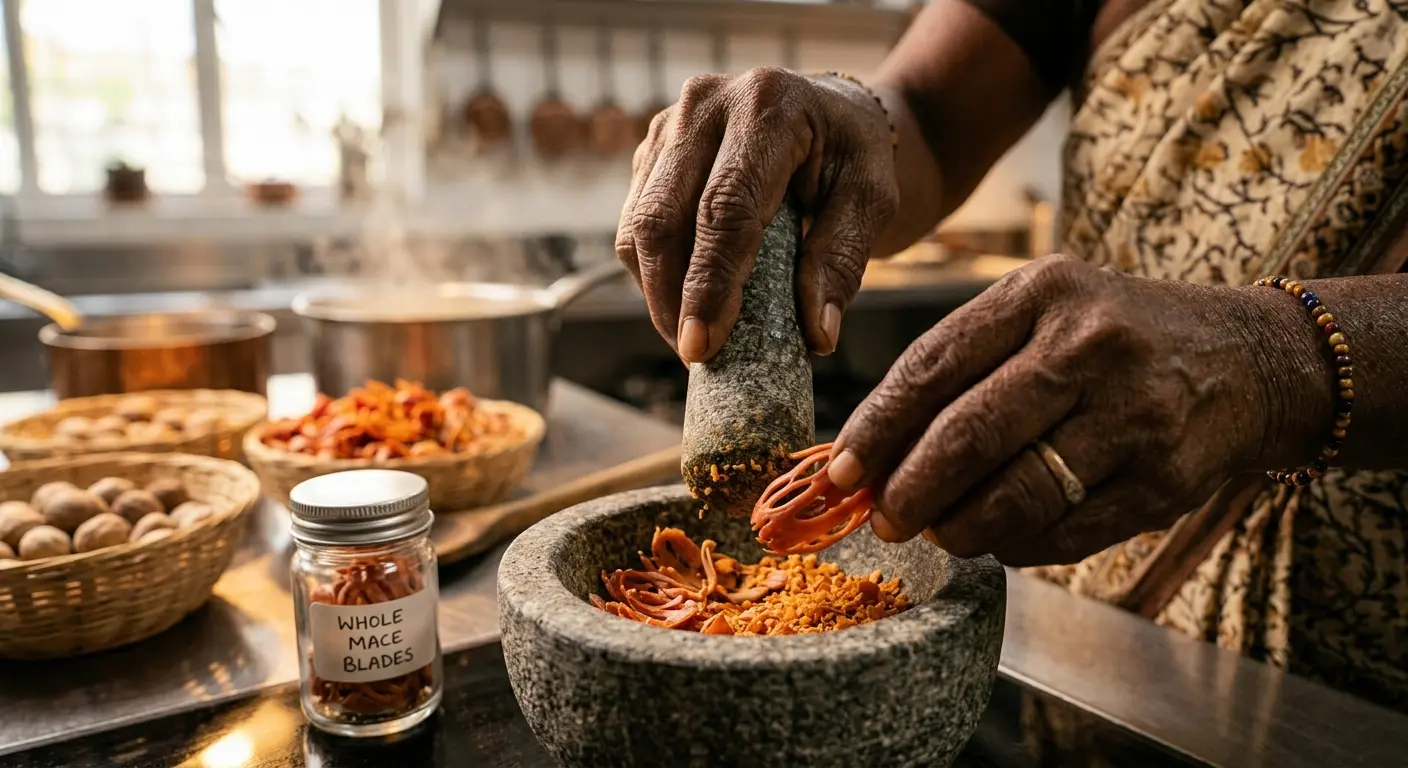
Use exactly like a bay leaf: drop 1–2 whole blades into a simmering soup or stock, let the flavour infuse slowly over the cooking time, then remove before serving.
🍷
Mulled Wine
A traditional addition to mulled wine spice blends alongside cinnamon and cloves — mace’s brightness balances the heavier spices and adds genuine complexity to the final drink.
🍛
Garam Masala & Ras el Hanout
A key ingredient in authentic garam masala, ras el hanout, and baharat spice blends. Toast whole blades with cardamom, cloves, and black pepper, then grind for maximum depth in curries and lamb korma.
🥧
Pies, Cakes & Doughnuts
Pumpkin pie, carrot cake, fruit pies, and doughnuts all benefit from a finishing pinch of freshly ground mace — adding complexity where nutmeg alone would feel one-dimensional.
Classic Mornay Sauce with Ceylon Mace — The Definitive Recipe
Mornay Sauce (Cheese Béchamel) with Fresh Ceylon Mace
Makes ~500ml · 20 min · The dish that proves mace’s worth instantly
🧀 Classic French 🌺 Mace essential ⏱️ 20 min
- Melt 40g butter in a saucepan over medium heat. Whisk in 40g plain flour and cook for 2 minutes to form a smooth roux, stirring constantly.
- Gradually whisk in 500ml warm whole milk, a little at a time, ensuring each addition is fully incorporated before adding more. Continue until smooth.
- Cook gently for 8–10 minutes, stirring frequently, until the sauce thickens to coat the back of a spoon.
- Add 1 whole Ceylon mace blade (or ¼ teaspoon freshly ground) directly into the sauce, along with a bay leaf and a pinch of salt. Simmer gently for 5 minutes to infuse.
- Remove the mace blade and bay leaf. Stir in 100g grated Gruyère or mature cheddar until fully melted and smooth.
- Taste and adjust seasoning. The mace should be felt as a subtle floral lift beneath the cheese — not identifiable as a distinct spice, but unmistakably present in its absence if you tried the sauce without it.
- Use immediately over cauliflower, pasta bakes, fish, or vegetables au gratin.
Mace Benefits: Traditional Use and Modern Understanding
Beyond its extraordinary culinary character, mace has a long history of traditional medicinal use across South Asian, Middle Eastern, and European herbal traditions:
💚
Digestive Support
Traditionally used to help treat diarrhoea, nausea, and digestive discomfort. In India, mace was historically chewed to soothe upset stomachs and freshen breath after meals — a practice documented for centuries.
🔬
Antioxidant Compounds
Mace’s essential oil — rich in monoterpenes, alpha-pinene, and myristicin — carries antioxidant properties similar to those found in nutmeg, contributing to its traditional reputation as a tonic spice.
🦷
Oral Freshness
The aromatic compounds in mace have a natural breath-freshening effect, consistent with its traditional use across South Asia as a post-meal digestive and breath aid.
🩺
Anti-Inflammatory Tradition
Like nutmeg, mace contains myristicin, which has been studied for mild anti-inflammatory properties. Traditional Ayurvedic use includes mace in formulations intended to soothe inflammation and support general wellness.
| Safety note: Like nutmeg, mace contains myristicin, which in extreme doses (10+ grams of ground spice — far beyond any normal culinary quantity) may have psychoactive effects. Normal culinary use — a pinch to ¼ teaspoon per dish — carries no such risk. Mace is a cooking spice, used in small amounts; this is not a safety concern at any quantity used in cooking. |
How to Store and Grind Whole Ceylon Mace
Keep whole mace blades sealed in an airtight, opaque container, away from heat, light, and humidity. Stored properly, whole blades retain their colour, aroma, and potency for close to two years.
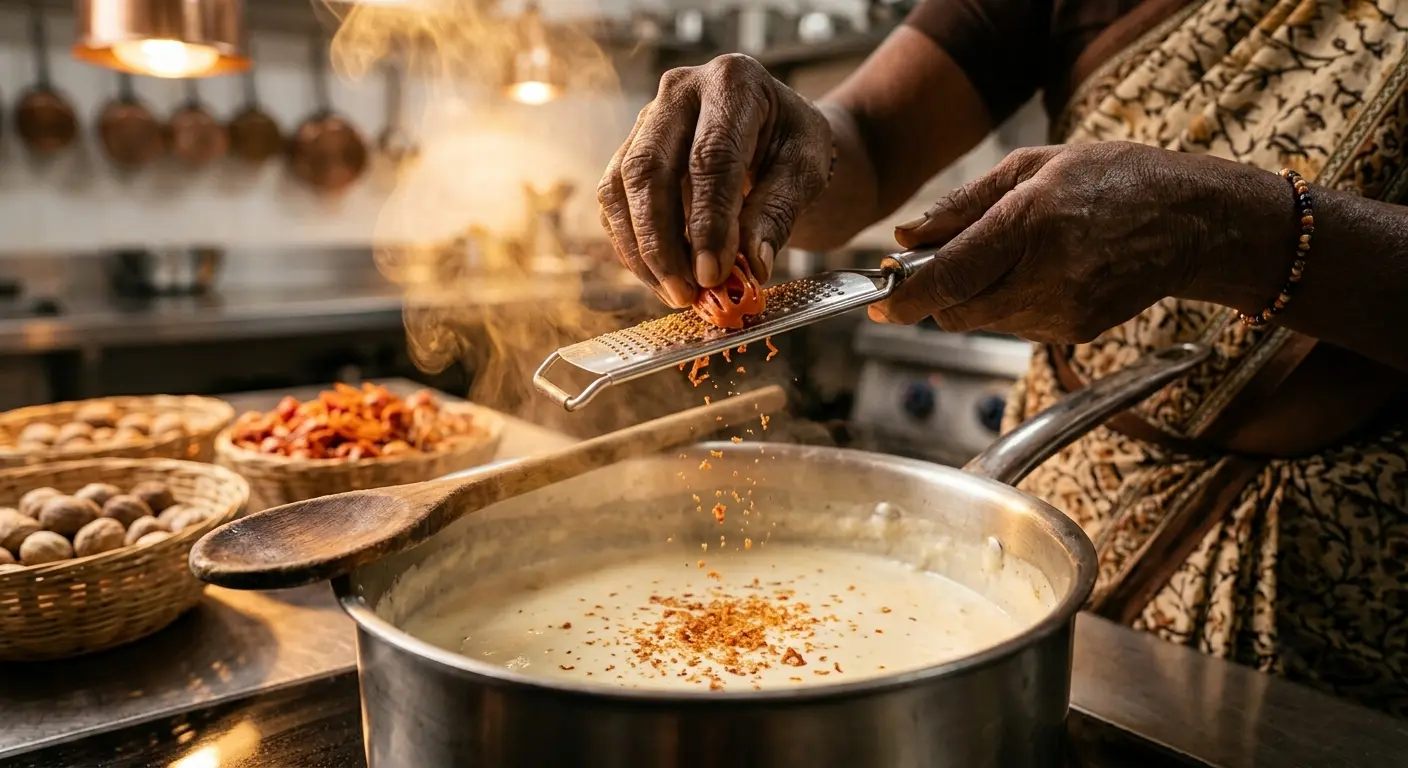
To use: crush or grind only what you need for each dish, immediately before adding it to your cooking. A dedicated spice grinder, mortar and pestle, or simply crushing a blade between your fingers (mace is delicate enough for this) all work well. Unlike nutmeg’s dense, oily texture which requires real force to grate, mace’s papery structure crushes easily and disperses evenly through liquids without clumping — a genuine advantage in smooth sauces and custards where grittiness would ruin the texture.
Frequently Asked Questions
What is mace spice?
Mace is a spice made from the dried, lacy aril (membrane) that surrounds the nutmeg seed inside the fruit of Myristica fragrans, a tropical evergreen tree native to Indonesia’s Banda Islands and now also grown in Sri Lanka. It is harvested by hand-peeling this bright red netting away from the nutmeg seed, then drying it until it turns a warm orange-amber colour. Mace has a lighter, more floral, and more citrus-forward flavour than nutmeg, despite coming from the exact same fruit.
What is the difference between mace and nutmeg?
Mace and nutmeg come from the same fruit but are botanically and flavour-wise distinct: mace is the outer lacy aril, while nutmeg is the inner seed kernel. Mace is lighter, more floral, with citrus and pine notes and a gentle peppery warmth. Nutmeg is denser, warmer, earthier, and sweeter, and can become bitter or overwhelming if overused. Mace works best in delicate cream sauces, custards, fish dishes, and light bakes, while nutmeg suits heavier, warmly spiced dishes like eggnog and pumpkin pie. The two are not directly interchangeable — substitution requires adjusting quantities, typically using about half as much when swapping one for the other.
Why should I buy whole mace blades instead of ground mace?
Mace loses up to 60% of its volatile aromatic compounds within 48 hours of grinding. Pre-ground mace sold in most stores has typically been sitting ground for 12 to 24 months before purchase, meaning most of its delicate floral and citrus top notes have already evaporated. Whole Grade No.1 blades retain their full aromatic potency for up to two years when stored properly, and take only seconds to crush or grind fresh — delivering a noticeably brighter, more complex flavour that pre-ground mace simply cannot match.
How do I use whole mace blades in cooking?
For long-simmered dishes like soups, stocks, and stews, drop in 1–2 whole blades at the start of cooking and remove them before serving, exactly as you would with a bay leaf. For sauces, custards, and baked goods, crush or grind the blade fresh immediately before use and stir it in — typically added toward the end of cooking, since mace can turn bitter if cooked too long at high heat. A pinch (roughly ¼ teaspoon ground) is usually sufficient for most dishes given mace’s concentrated character.
Is Ceylon Mace organic and free from additives?
Yes — Zeylaan Ceylon Mace Grade No.1 is certified organic, grown in traditional forest farm plots in Sri Lanka without synthetic pesticides or chemical fertilisers. It contains absolutely no additives, artificial colours, synthetic flavour enhancers, or preservatives. The product is exactly what grew naturally in the field, hand-picked, sun-dried, and sealed for freshness with nothing added at any stage.
Can I substitute mace if I can’t find it?
The closest substitute for mace is nutmeg itself, used at roughly half the quantity called for in the original recipe, since nutmeg is more concentrated and earthier. Allspice or anise can also approximate some of mace’s warm, aromatic character in a pinch, though neither will fully replicate its distinctive floral-citrus brightness. Because mace is genuinely rare in whole form, sourcing Grade No.1 whole blades directly is the best way to guarantee an authentic result rather than relying on substitutes.
Which size of Ceylon Mace should I buy?
The 250g bag ($18.49) is ideal for home cooks who want to explore mace’s character across several recipes — whole blades store for up to two years, so there is no risk of waste. The 500g ($27.49) and 750g ($34.49) sizes suit serious home cooks and small professional kitchens using mace regularly across savory and sweet applications. The 1kg ($40.49) is the best value per gram for professional kitchens, restaurants, and dedicated spice enthusiasts who use mace as a regular pantry staple.

Order Ceylon Mace Grade No.1 — Delivered Worldwide
Whole Blades · Sun-Dried · Certified Organic · Hand-Picked at Peak Ripeness
The gourmet spice professional kitchens favour — shipped from Sri Lanka to 28+ countries
Have Questions About This Product?
Need more details, bulk pricing, custom orders, or worldwide shipping information? Our team at Zeylaan is here to help.
🌐 Website: https://www.zeylaan.com
📧 Email: hello@zeylaan.com
📲 WhatsApp Support: +94 72 470 7185
🚚 Global Shipping Available
🔒 Secure Payments & Trusted Service
We are committed to transparent communication, authentic sourcing, and a smooth shopping experience from Sri Lanka to the world.
👉 Contact Zeylaan with confidence before you buy.