


The complete guide to authentic ceylon green cardamom from Sri Lanka — its extraordinary health benefits, how to use it in coffee, tea, and cooking, how it compares to other types, and where to buy the genuine article.
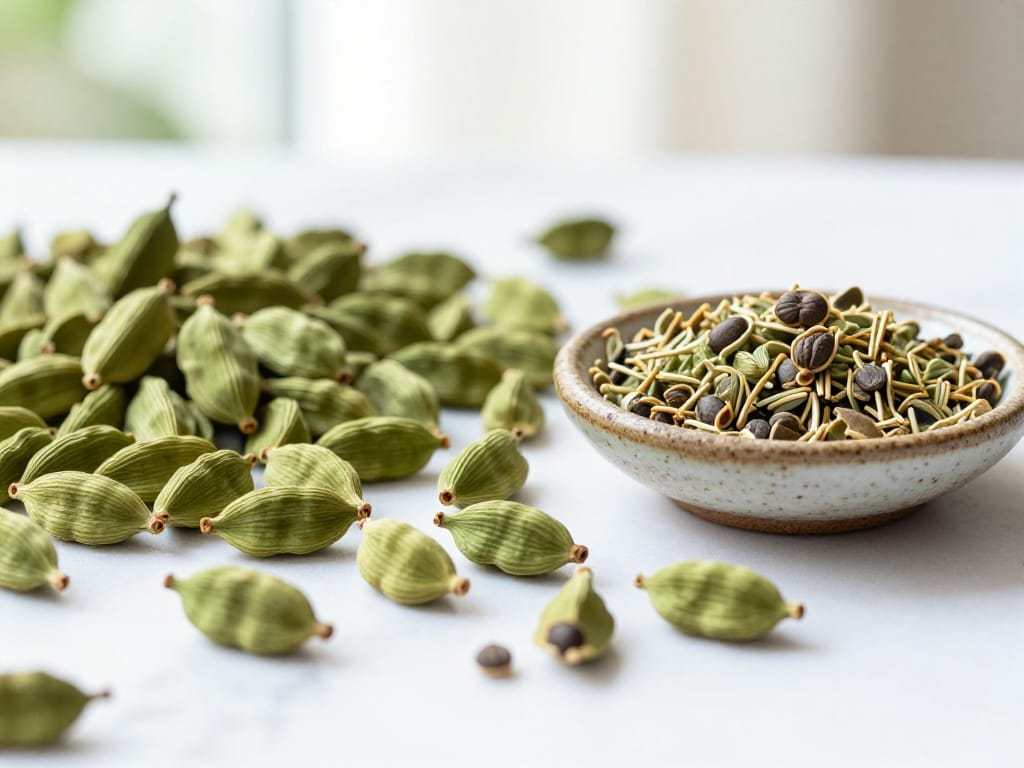
Pepper is the King of Spices. But cardamom — intensely aromatic, impossibly complex, revered across civilizations for thousands of years — has always been the Queen. And among all cardamom origins, Sri Lanka produces a variety prized by spice traders and chefs alike for its distinctly sweet, floral complexity: Ceylon Green Cardamom.
It flavors Turkish coffee and Scandinavian buns. It anchors South Asian chai and Indian biryani. It is used in Ayurvedic medicine, Middle Eastern perfumery, and increasingly, in the daily wellness routines of people who understand what genuine spice can do. This guide covers everything — what cardamom is, its types, health benefits, best uses, daily dosage, and how to identify and buy the real thing.
| 3rd Most Expensive Spice | 40+ Active Compounds | 4,000 Years of History | Sri Lanka Premium Origin |
What Is Cardamom? The Spice the World Overlooked
Cardamom belongs to the ginger family (Zingiberaceae) and grows as a tropical perennial in the humid highland forests of South Asia. The spice is the dried seed pod — a small capsule containing between 15 and 20 dark, resinous seeds that carry virtually all of the aroma and flavour.
Its flavour profile is one of the most complex in the spice world: simultaneously sweet, floral, eucalyptus-like, slightly citrus, warmly spiced, and faintly minty. No single description does it justice, which is precisely why it has occupied a central place in cuisines as different as Scandinavian baking, Arabian coffee, Indian curries, and Sri Lankan rice dishes for millennia.
The word itself derives from the ancient Greek kardámōmon, and cardamom pods have been found in Egyptian archaeological sites and are referenced in Sanskrit texts older than recorded European history.
Ceylon Green Cardamom vs Black Cardamom: What’s the Difference?
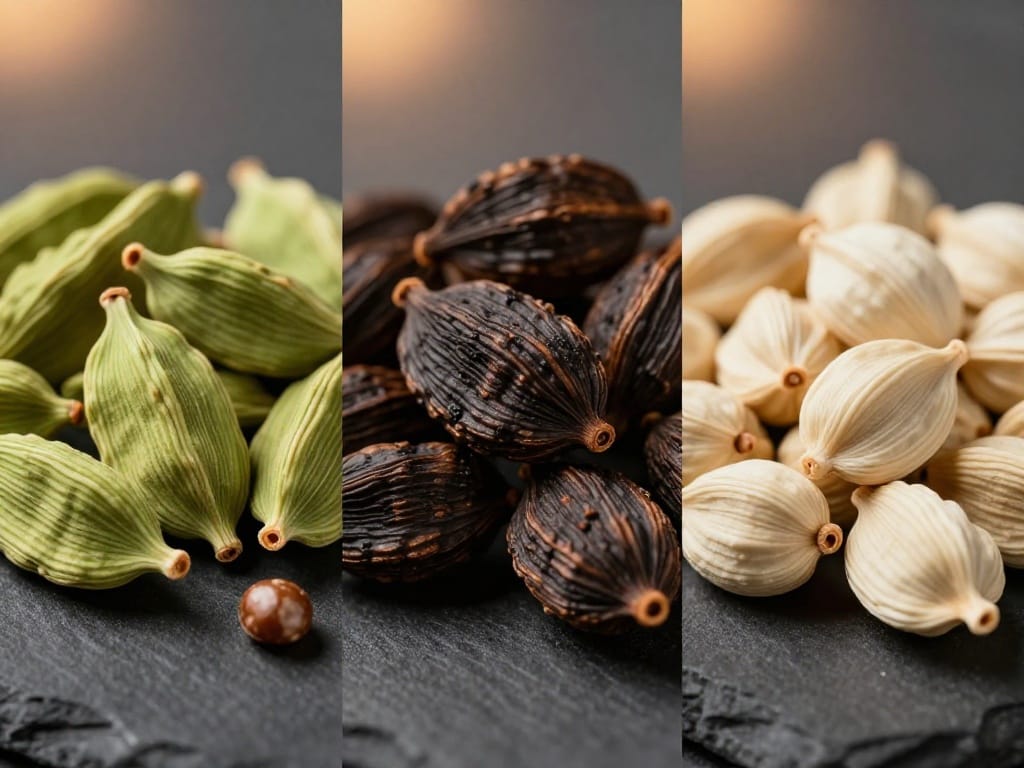
When people search for cardamom, they frequently encounter two varieties that look and taste almost nothing alike. Understanding the difference is essential before buying.
| Feature | Green Cardamom (Ceylon) | Black Cardamom | White Cardamom |
| Species | Elettaria cardamomum | Amomum subulatum | Bleached Green Cardamom |
| Origin | Sri Lanka, South India | Eastern Himalayas | Various (processed) |
| Flavour | Sweet, floral, citrusy, complex | Smoky, earthy, camphor-like | Milder, floral (oils diminished) |
| Aroma Intensity | ✔ Very High | Moderate (smoky) | ✘ Low |
| Essential Oil | 4–9% (highest) | 1–3% | Reduced by bleaching |
| Best Uses | Coffee, tea, chai, baking, desserts, curries | Slow-cooked meat, biryani, smoky rice | Some European baking (pale dishes) |
| Medicinal Value | ✔ Highest | Moderate | Lowest |
| Price Point | Premium | Mid-range | Mid-range |
Ceylon Cardamom is green cardamom — the variety grown in Sri Lanka’s highland regions, where the combination of altitude, humidity, and mineral-rich soil produces pods with the highest essential oil content and most complex aromatic profile of any cardamom origin worldwide.
What Does Ceylon Green Cardamom Taste Like? The Flavor Profile Explained
If you’ve only tasted pre-ground supermarket “cardamom” from an indeterminate origin, you may not have experienced what genuine Ceylon cardamom actually tastes like. The difference between freshly cracked Ceylon cardamom pods and generic ground powder is comparable to the difference between freshly ground Arabica coffee and instant granules.
Crack open a Ceylon cardamom pod and the volatile compounds release immediately — a rush of eucalyptus and sweet citrus in the nose, followed by floral warmth, a ghost of mint, and a long, gently spiced finish on the palate. There is no harshness. No single note dominates. It is one of the most genuinely elegant flavors in the entire spice world.
Whole pods hold their essential oils far longer than pre-ground powder. Buy whole pods, crack them fresh, and grind the seeds as needed for the truest Ceylon cardamom flavor experience.
Ceylon Green Cardamom Health Benefits: What Research Supports
Searches for “cardamom health,” “cardamom benefits,” and “what is cardamom good for” are all rising sharply — and the evidence behind cardamom’s wellness profile is more substantial than most people realize. Its essential oil is rich in 1,8-cineole, alpha-terpinyl acetate, linalool, and limonene — compounds with well-documented biological activity.
🔥
Respiratory Support
Cardamom’s high 1,8-cineole content makes it one of the most effective natural bronchodilators among culinary spices. Traditional Ayurvedic medicine has used it for respiratory conditions for centuries, and modern studies support its role in improving airflow and reducing bronchial inflammation.
🩺
Blood Pressure Regulation
Clinical trials have shown meaningful reductions in systolic and diastolic blood pressure with regular cardamom supplementation, possibly through diuretic effects and antioxidant activity that reduces arterial stiffness.
🦷
Oral Health & Breath
Cardamom has long been chewed after meals across South Asia for its powerful antibacterial effect against oral pathogens. Its volatile compounds actively inhibit Streptococcus mutans and other bacteria responsible for tooth decay and bad breath — one reason it is a core ingredient in natural oral care products.
🔥
Anti-Inflammatory Action
Multiple compounds in cardamom inhibit inflammatory pathways (NF-κB) and reduce markers like TNF-alpha and interleukins in laboratory and animal studies. Chronic low-grade inflammation underlies most metabolic diseases, making cardamom a valuable daily food-based anti-inflammatory.
🧬
Antioxidant Power
Cardamom exhibits strong free radical scavenging activity. Its polyphenol and flavonoid content helps protect cells from oxidative stress, with particular relevance for cardiovascular and cognitive aging.
🧠
Digestive & Gut Health
Used as a digestive aid since ancient times, cardamom stimulates the production of digestive enzymes, reduces bloating and flatulence, and has a carminative effect. It is frequently combined with other spices in Ayurvedic formulas for digestive complaints.
Note: Cardamom is a powerful functional food — not a pharmaceutical intervention. These benefits are supported by research but cardamom should complement, not replace, medical treatment for any health condition.
Cardamom in Coffee: The Ancient Ritual Behind the Fastest-Growing Trend
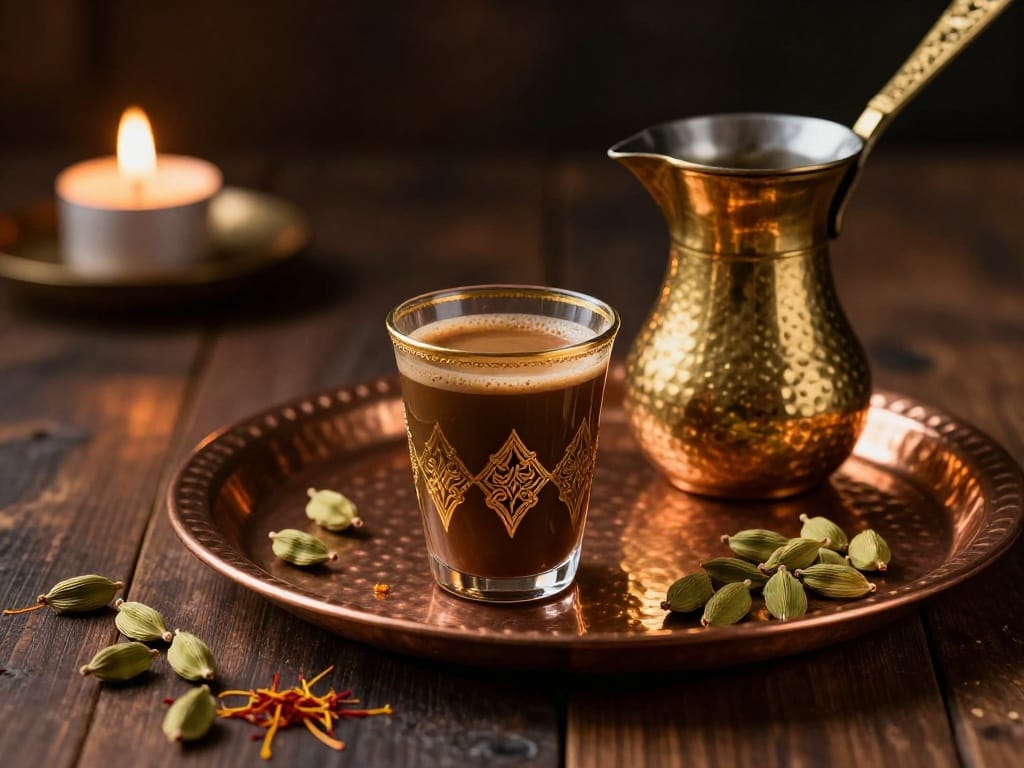
“Coffee with cardamom” is surging as a search term — up 90% — and for good reason. This pairing is not a new invention. It is one of the oldest and most revered beverage traditions in the world, born in the Arabian Peninsula and still central to hospitality culture across the Middle East, Turkey, and Central Asia.
Why Cardamom and Coffee Work Together
On a purely chemical level, cardamom’s terpene compounds bind to the same olfactory receptors as many of coffee’s most desirable aromatic notes — intensifying perceived sweetness, reducing perceived bitterness, and adding a dimension of complexity that transforms a simple brew into something extraordinary. It is, in effect, a natural coffee enhancer with millennia of empirical validation.
Traditional Arabic Cardamom Coffee (Qahwa)
Serves 2 · Prep 5 min · Steep 10 min
- Lightly crush 4–5 Ceylon green cardamom pods to release the seeds — do not fully powder them.
- Add 2 cups of water and the crushed pods to a small saucepan over medium heat.
- Add 2 tablespoons of coarsely ground light-roast coffee (or Arabic-style ground coffee).
- Optional: add a few saffron threads and a small piece of Ceylon cinnamon.
- Simmer on low heat for 8–10 minutes — do not boil rapidly.
- Strain into a dallah (or pour carefully) into small cups. Serve with dates.
For everyday use, add ¼ teaspoon of freshly ground Ceylon cardamom seeds directly to your coffee grounds before brewing — drip, pour-over, French press, or espresso. The essential oils bloom with the heat of extraction.
Cardamom Tea & Chai: Brewing the Perfect Cup
Cardamom tea is among the top-searched cardamom applications globally — and it represents the simplest, most accessible way to bring Ceylon cardamom’s full aromatic spectrum into daily life. Whether brewed as a standalone herbal infusion or woven into a full spiced chai, cardamom’s role in tea culture spans the Indian subcontinent, the Persian world, and increasingly, Western wellness routines.
Simple Ceylon Green Cardamom Tea
Crack 2–3 green cardamom pods and steep them in freshly boiled water (not rolling boil — around 90°C) for 5–7 minutes. The result is a pale golden, intensely aromatic infusion — naturally caffeine-free, gently sweet without sugar, and genuinely calming. Add honey and a squeeze of lemon for a classic variation.
Cardamom Chai (Masala Chai)
A proper cardamom chai uses 2–3 cracked green pods per cup alongside ginger, cinnamon, cloves, and black pepper, simmered together with black tea and whole milk. Ceylon cardamom’s floral sweetness provides the essential top note that distinguishes a great chai from a merely adequate one.
Searches for “cardamom latte” are also climbing — cold or hot, a cardamom oat milk latte is one of the most compelling cafe drinks that almost no cafe in the West currently offers. An opportunity hiding in plain sight.
How to Use Ceylon Green Cardamom Pods, Seeds & Powder
Cardamom is one of the most versatile spices in the world. Here is a comprehensive map of its culinary territory:
☕
Coffee & Hot Drinks
Brew with grounds or steep whole pods. Add to chai, golden milk, and hot chocolate for extraordinary depth.
🍞
Scandinavian Baking
Essential in Swedish kanelbullar (cinnamon buns), Norwegian kardemomme bread, and Finnish pulla — the floral note is irreplaceable.
🍛
Rice & Curries
Whole pods tempered in hot oil release aromatic compounds into biryani, pilaf, korma, and rice dishes across South Asian cuisine.
🍨
Ice Cream & Desserts
Cardamom ice cream is trending fast (+50%). Ground seeds infuse beautifully into custard, kheer, halwa, and crème brûlée.
🥭
Mango Lassi
Mango lassi searches are surging. A pinch of fresh-ground Ceylon cardamom is what separates an authentic lassi from a plain yoghurt smoothie.
🌸
Perfumery & Aromatics
Cardamom oil and cardamom essential oil are trending sharply in fragrance (+30%, +40%). It forms the heart note in many luxury perfumes, including the much-searched Jo Malone Mimosa & Cardamom.

Cardamom Essential Oil & Cardamom Oil: The Rising Wellness Trend
Two of the fastest-rising cardamom search terms are “cardamom oil” (+60%) and “cardamom essential oil” (+40%) — reflecting a broader shift toward using spice extracts in aromatherapy, natural health, and premium perfumery.
Culinary Cardamom Oil
Cardamom-infused oil (typically a carrier oil like coconut or olive oil steeped with whole pods) is used in cooking, marinades, and salad dressings. A few drops add intense aromatic complexity to dishes without adding bulk or texture from the pods themselves.
Cardamom Essential Oil (Aromatherapy)
Steam-distilled from the seeds, cardamom essential oil is rich in 1,8-cineole and alpha-terpinyl acetate. In aromatherapy applications, it is used for its mood-uplifting, mentally clarifying, and respiratory-supporting properties. It blends beautifully with bergamot, rose, sandalwood, and — fittingly — cedarwood and cinnamon in perfumery applications.
Never ingest undiluted essential oil. Always dilute in a carrier before any skin application. For culinary use, ensure you are using a food-grade product.
Growing Cardamom: How Ceylon Cardamom Is Cultivated
Searches for “growing cardamom,” “cardamom plant,” and “cardamom flower” are all trending upward — driven by both home growers and curious spice enthusiasts. Here’s what makes Sri Lankan cardamom cultivation distinctive.
Terroir: Why Sri Lanka Produces Premium Ceylon Green Cardamom
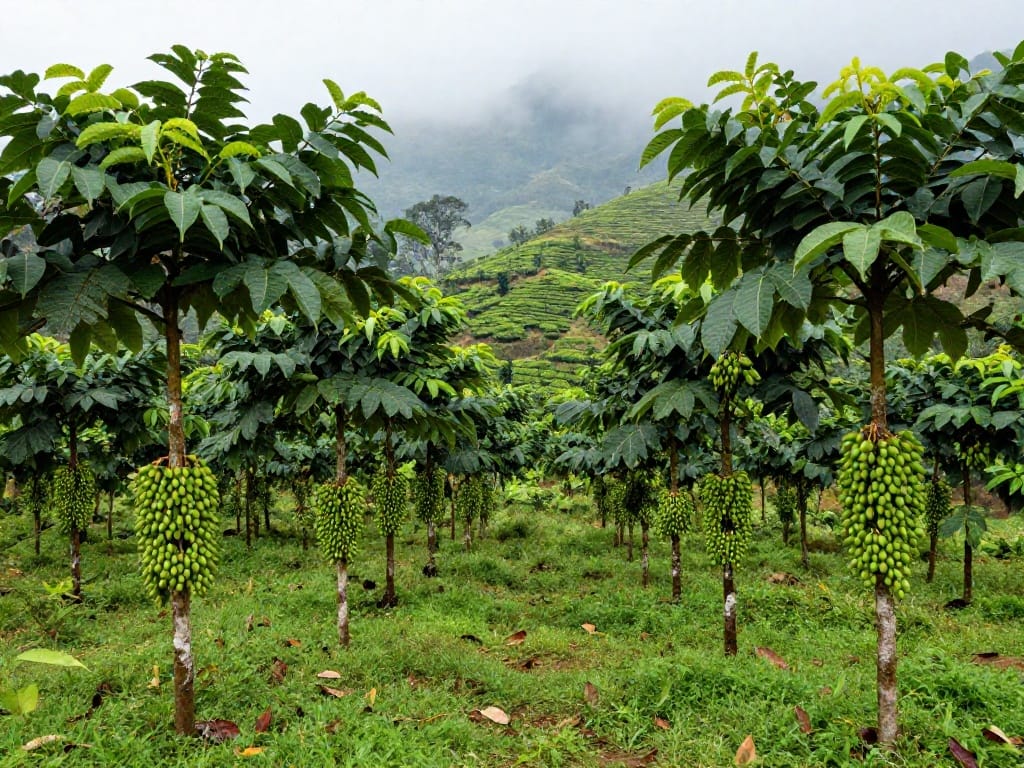
Ceylon cardamom thrives in Sri Lanka’s central highland districts — Kandy, Matale, Nuwara Eliya — at altitudes between 600 and 1,500 metres. The combination of year-round rainfall (2,000–3,000 mm annually), well-drained acidic volcanic soil, high humidity, and temperatures of 18–35°C creates the precise conditions for maximum essential oil development in the pods.
The plant itself is a dramatic tropical perennial — growing up to 4 metres tall with large lance-shaped leaves, delicate white and pale green flowers that bloom at the base of the stem, and the characteristic light green pod clusters that develop from those flowers. Each pod is hand-harvested before it fully ripens to preserve the maximum volatile oil content.
How to Buy Genuine Ceylon Green Cardamom: A Buyer’s Guide
The search “cardamom near me” is growing 20% — but in most Western supermarkets, what is sold as cardamom is generic product with no origin guarantee, often stored for years before reaching shelves, and priced as a commodity rather than a premium aromatic spice. Here’s how to find the real thing.
What to Look For in Green Cardamom Pods
- Colour: Vibrant lime-to-olive green. Yellowed or bleached pods have lost significant essential oil.
- Weight: Good pods feel plump and slightly heavy relative to their size — they should be full of seeds.
- Aroma: Crack a single pod. Fresh Ceylon cardamom smells intensely floral, sweet, and eucalyptus-like immediately. A faint or flat aroma indicates age or poor quality.
- Seeds: Dark brown to black, sticky, resinous. Pale or dry seeds indicate old stock.
- Origin documentation: Look for Sri Lankan origin certification, especially for premium grades.
Whole Pods vs Ground Cardamom vs Cardamom Seeds
| Form | Shelf Life | Best For | Notes |
| Whole Pods | 2–3 years | Coffee, tea, rice, slow cooking | Highest oil retention. Grind fresh as needed. |
| Seeds Only | 1–2 years | Baking, grinding fresh | Faster to use but oils begin to dissipate. |
| Ground Powder | 6–12 months | Baking, quick meals | Convenient but loses potency faster. Buy in small quantities. |
| Essential Oil | 3–5 years | Aromatherapy, perfumery | Very concentrated. Not for direct ingestion. |
Storage tip: Store whole cardamom pods in an airtight glass jar away from heat, light, and moisture. Never store in a plastic container near the stove — the oils permeate plastic and accelerate degradation. A cool, dark cupboard preserves potency for up to three years.
Cardamom vs Cinnamon: Can You Substitute One for the Other?
“Cardamom vs cinnamon” is a trending comparison (+70%) and “cardamom replacement / cardamom substitute” searches are high and rising. Here’s the honest answer:
Cardamom and cinnamon are not substitutes for each other. They are complementary spices that often appear together precisely because their aromatic profiles are so different — cinnamon brings warm woodiness; cardamom brings floral citrus-eucalyptus complexity. Replacing one with the other in a recipe will produce a fundamentally different result.
If you’re out of cardamom and need a substitute, a combination of ground cinnamon and a small amount of nutmeg is the closest approximation for baking applications — but it lacks the floral and eucalyptus notes that make cardamom unique. For coffee and tea applications, there is genuinely no close substitute.
Frequently Asked Questions About Ceylon Cardamom
What is ceylon green cardamom and what is it used for?
Cardamom is a tropical spice from the ginger family, native to South Asia. The dried seed pods — and particularly the seeds inside them — are used to flavour coffee, tea, chai, rice dishes, curries, baked goods, desserts, and confectionery. It is also used medicinally in Ayurvedic and traditional medicine systems, and in aromatherapy and perfumery for its essential oil.
What is ceylon green cardamom good for in terms of health?
Research supports cardamom’s benefits for respiratory health (bronchodilation), blood pressure reduction, oral health and breath freshening, anti-inflammatory and antioxidant activity, digestive support, and general metabolic health. Its high essential oil content — particularly 1,8-cineole — drives most of these effects. Ceylon cardamom from Sri Lanka has the highest essential oil concentration of any origin.
What does ceylon green cardamom taste like?
Fresh Ceylon green cardamom has a uniquely complex flavour: sweet and floral with notes of eucalyptus and citrus, a faint mistiness, and a long warm spiced finish. It has no bitterness or harshness. Pre-ground commercial cardamom is typically a paler version — fresher is always dramatically better, so buying whole pods and cracking them fresh is strongly recommended.
How many ceylon green cardamom pods or how much powder per day is safe?
Culinary use — 2 to 6 whole pods or ¼ to ½ teaspoon of ground cardamom daily — is safe and well-tolerated for most adults. For therapeutic use, doses up to 1.5g of ground cardamom per day have been used in clinical studies without adverse effects. Cardamom is very well tolerated. Pregnant women should keep to culinary amounts and avoid concentrated extracts or supplements.
What is the difference between green and black cardamom pods?
Green cardamom (including Ceylon cardamom) comes from Elettaria cardamomum and is the true cardamom — sweet, floral, and intensely aromatic. Black cardamom (Amomum subulatum) is a completely different species with a distinctly smoky, earthy, camphor-like flavour. They are not interchangeable. Black cardamom is used in slow-cooked savory dishes; green cardamom is the one used in coffee, tea, desserts, and most baking.
How do you use ceylon green cardamom pods in cooking?
Whole pods can be tempered in hot oil (Indian cooking), steeped in liquid (coffee, tea, sauces), or simmered in rice. The pods themselves are not eaten — they are typically removed before serving. For baking and spice blends, crack the pods open and grind the seeds fresh in a mortar or spice grinder. Do not grind the entire pod — the outer shell adds woody notes but minimal flavour compared to the seeds.
Where can I buy genuine Ceylon green cardamom?
The most reliable source is directly from Sri Lankan specialty producers or curated online stores that source from Sri Lanka and can provide origin documentation. Mass-market supermarket cardamom rarely specifies origin and is typically commodity product from Guatemala or India. For guaranteed Ceylon-origin cardamom with traceability, look for Sri Lankan specialty food brands that certify their sourcing.
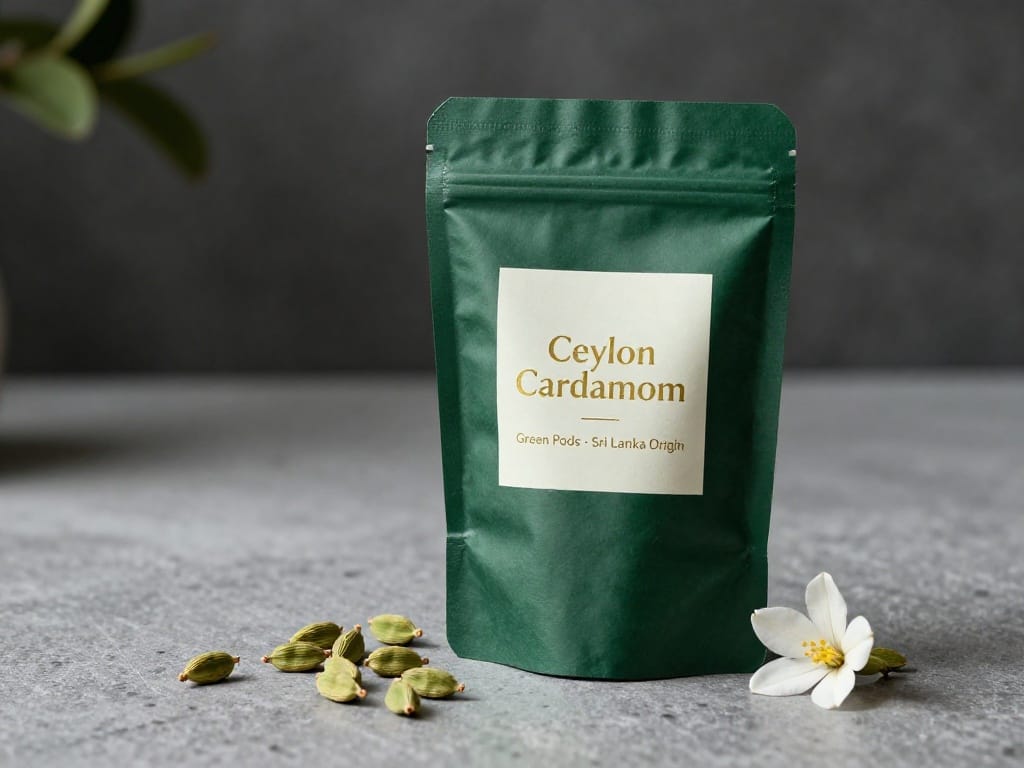
Experience Genuine Ceylon Green Cardamom
Zeylaan sources premium green cardamom directly from Sri Lanka’s highland plantations — with full origin traceability. Whole pods, ground powder, and seeds. No commodity blends. No mystery origins.
Have Questions About This Product?
Need more details, bulk pricing, custom orders, or worldwide shipping information? Our team at Zeylaan is here to help.
🌐 Website: https://www.zeylaan.com
📧 Email: hello@zeylaan.com
📲 WhatsApp Support: +94 72 470 7185
🚚 Global Shipping Available
🔒 Secure Payments & Trusted Service
We are committed to transparent communication, authentic sourcing, and a smooth shopping experience from Sri Lanka to the world.
👉 Contact Zeylaan with confidence before you buy.