


The complete guide to Dilmah Premium Ceylon Tea Bags — 100 bags of pure, single-origin black Ceylon tea from Sri Lanka. Its extraordinary taste, caffeine content, health benefits, brewing guide, and why it outclasses every other tea bag on the shelf.
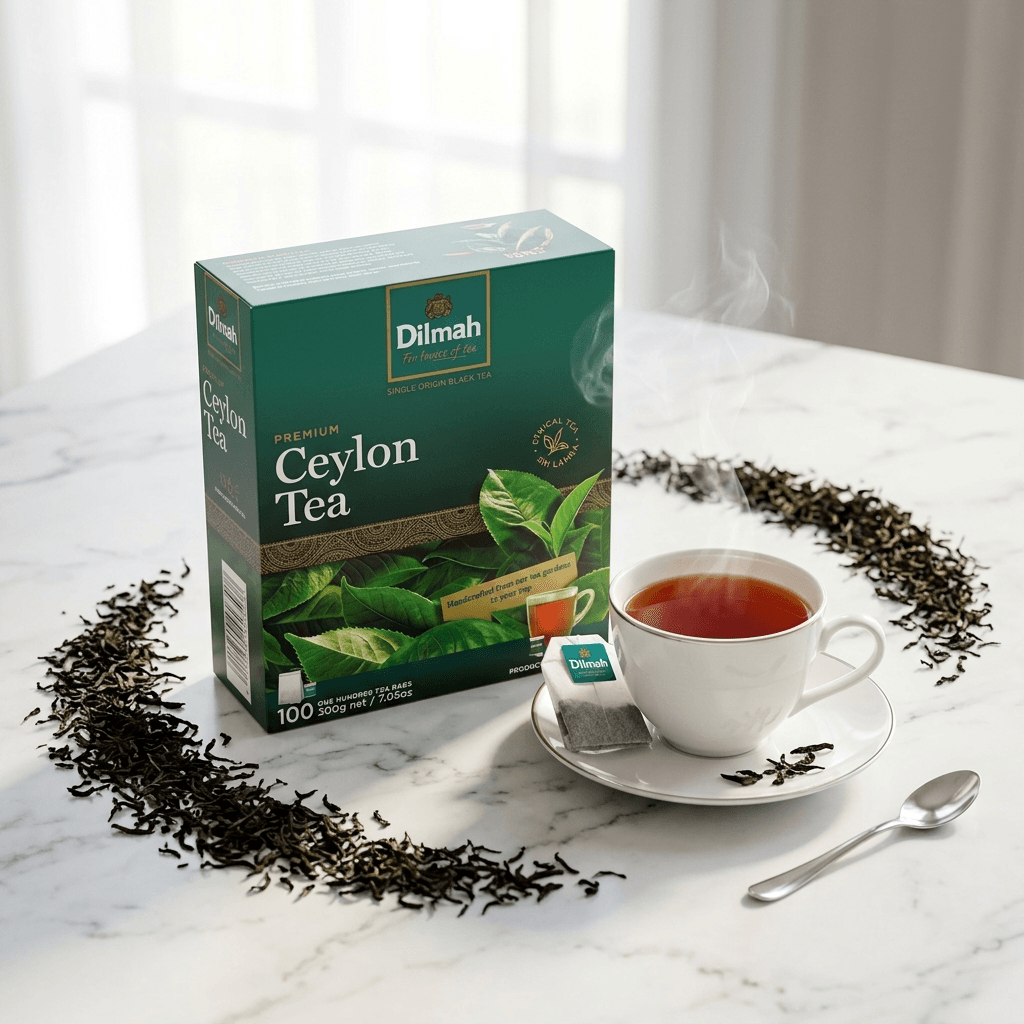
There are thousands of tea brands in the world. There is only one that was founded on a single non-negotiable principle: tea must be picked, processed, and packed in the country where it is grown. That brand is Dilmah. And the tea it grows, processes, and packs in Sri Lanka — pure Ceylon black tea — is, by almost any measure, the finest tea bag you can buy.
This guide covers everything you need to know about Dilmah Premium Ceylon Tea Bags — the 100-bag, 200g box available at Zeylaan. What makes Ceylon tea different, how Dilmah does it differently, the taste profile, caffeine content, proven health benefits, how to brew it perfectly, and how it compares to Assam, Darjeeling, and every other tea you may have tried.
| 100 Tea Bags | 200g Net Weight | Single Origin: Sri Lanka | Zero Blending or Additives |
What Is Ceylon Tea? The Origin Story
Ceylon tea is black tea — and green tea, white tea, and oolong — grown within the island nation of Sri Lanka, formerly known as British Ceylon. The island’s dramatic geography, ranging from steamy coastal lowlands to cool highland estates at over 2,000 metres elevation, produces teas of extraordinary variety and complexity. But Ceylon black tea is the category that made Sri Lanka famous, and it remains one of the most celebrated teas on earth.
The tea plant (Camellia sinensis) was introduced to Ceylon in 1867 by James Taylor on the Loolecondera estate, Kandy. Within a generation, Ceylon had become the world’s largest tea exporter — a position it held for decades. Today Sri Lanka ranks among the top four global tea producers, and “Ceylon tea” carries a protected geographical designation of origin, similar to Champagne or Parmigiano-Reggiano.
The search “pure Ceylon tea” has surged +100% recently, driven by consumers who have learned to distinguish genuine single-origin Sri Lankan tea from blended commodity products. Dilmah is the gold standard of that genuine article.
The key distinction: Most international tea brands — including many famous British ones — blend teas from multiple countries (Kenya, India, China, Sri Lanka) to hit a consistent low-cost flavour target. Dilmah uses only 100% single-estate Sri Lankan tea, picked, processed, and packed in Sri Lanka before export. That difference is everything.
Dilmah Premium Ceylon Tea Bags: Product Breakdown
Searches for “Dilmah Ceylon tea” are up +180% — the single fastest-rising query in the entire Ceylon tea category. Here’s exactly what is inside the box:
Product Specifications
| Brand Dilmah Tea (Sri Lanka) | Product Name Dilmah Premium Ceylon Tea Bags |
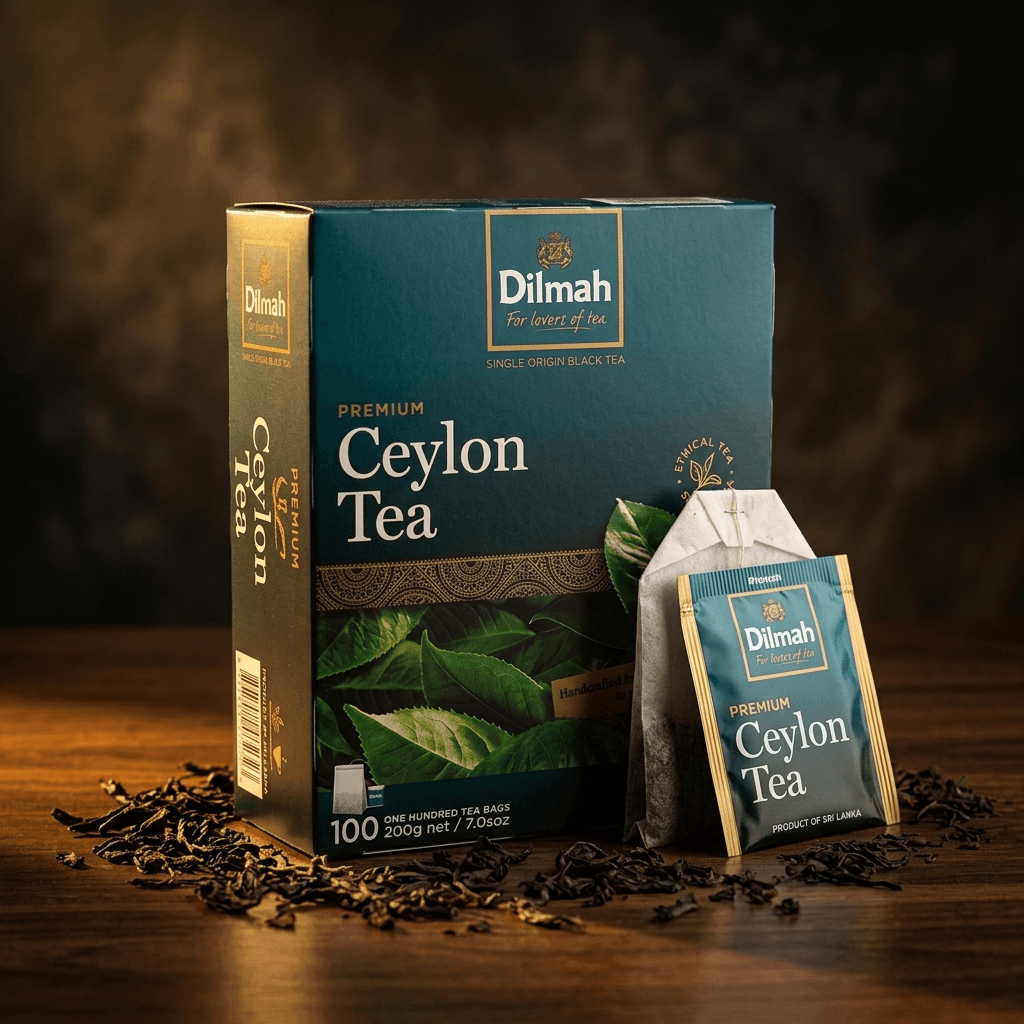
| Count 100 individually enveloped tea bags | Net Weight 200g (2g per bag) |
| Tea Type Pure Ceylon black tea (Orange Pekoe grade) | Origin Single origin — Sri Lanka |
| Blending None — 100% pure Ceylon | Additives None — no flavorings, no preservatives |
| Caffeine ~50–90mg per cup (moderate-high) | Best Brew Temp Freshly boiled water (95–100°C) |
| Steep Time 3–5 minutes | Available At Zeylaan.com — ships to 28+ countries |
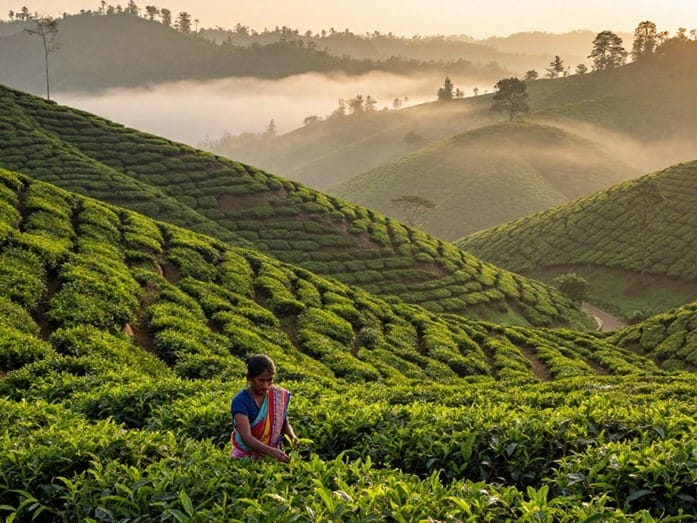
What Does Ceylon Tea Taste Like? The Full Flavour Profile
“What does Ceylon tea taste like” and “ceylon tea taste” are consistently searched terms — and the answer reveals why Ceylon black tea is in a class of its own among the world’s breakfast teas.
Dilmah Premium Ceylon delivers a cup characterized by bright, brisk, and full-bodied liquor with a deep amber-red colour. The flavour is clean and assertive — naturally sweet with subtle citrus and floral top notes (particularly when drunk without milk), a satisfying astringency that signals genuine tannin content, and a clean, lingering finish without bitterness.
The flavour profile varies by brewing elevation in Sri Lanka. Dilmah’s premium blend draws from multiple elevation tiers to achieve a consistent character across the year:
| Elevation Tier | Flavour Character | Colour | Body |
| High Grown (1,200m+) Nuwara Eliya, Dimbula | Delicate, floral, light, exquisite | Pale golden | Light–medium |
| Mid Grown (600–1,200m) Kandy | Balanced, rounded, medium body | Rich amber | Medium |
| Low Grown (<600m) Ruhuna, Sabaragamuwa | Bold, strong, malty, earthy | Deep red-brown | Full |
Dilmah Premium blends these tiers for a cup that is bold enough to carry milk beautifully, yet refined enough to drink black. It is, by design, an all-day tea.
Ceylon Tea vs Assam vs Darjeeling vs English Breakfast: The Definitive Comparison
These are among the most-searched tea comparison terms globally. Here is the honest, comprehensive breakdown:
| Ceylon Black Tea ⭐ Origin: Sri Lanka Flavour: Bright, brisk, citrusy-floral, clean Body: Medium-full With milk: Outstanding Black: Excellent Caffeine: Moderate-high (50–90mg) Unique to: Sri Lanka — protected origin | Assam Tea Origin: Northeast India Flavour: Malty, robust, earthy, strong Body: Full With milk: Excellent Black: Can be astringent Caffeine: High (60–100mg) Unique to: Classic English breakfast base |
| Darjeeling Tea Origin: West Bengal, India Flavour: Muscatel, floral, delicate, wine-like Body: Light–medium With milk: Not recommended Black: Best black, no milk Caffeine: Lower (30–50mg) Unique to: The “Champagne of teas” | English Breakfast Origin: Blend (Ceylon + Assam + Kenya) Flavour: Consistent, robust, one-dimensional Body: Full With milk: Designed for it Black: Often too harsh Caffeine: High (70–110mg) Unique to: No single origin — blended commodity |
Bottom line: If you want a single-origin tea with genuine character, provenance, and the versatility to be enjoyed black or with milk, at any time of day, Dilmah Pure Ceylon beats a blended English Breakfast on every dimension except price — and even then, 100 quality bags at 2g each is exceptional value per cup.
Ceylon Orange Pekoe Tea: What the Grade Actually Means
“Orange pekoe tea” and “Ceylon orange pekoe tea” are surging (+70% and +50% respectively) — and almost universally misunderstood. Let’s clear it up.
Orange Pekoe (OP) is not a flavour. It is not tea with orange in it. It is a leaf grade designation describing the size and quality of tea leaves used. In the grading system for Ceylon black tea:
| Grade | Full Name | Description | Cup Quality |
| SFTGFOP | Special Finest Tippy Golden Flowery Orange Pekoe | Highest grade, many golden tips | Exceptional |
| FTGFOP | Finest Tippy Golden Flowery Orange Pekoe | Very fine with golden tips | Excellent |
| OP ⭐ | Orange Pekoe | Full-leaf, wiry, no tip — clean, bright | Premium |
| BOP | Broken Orange Pekoe | Broken leaf — stronger, faster brew | Strong / tea bags |
| BOPF | Broken Orange Pekoe Fannings | Fine broken — fastest infusion | Very strong |
| D / Dust | Dust | Finest particles — commodity only | Industrial |
Dilmah Premium uses BOP and BOPF grades in their tea bags — the grade optimized specifically for bag brewing, producing a full-strength cup in 3–5 minutes. The term “Orange Pekoe” on the box signals that this is a proper leaf-grade tea, not floor dust.
Ceylon Green Tea vs Ceylon Black Tea: Which Should You Choose?
“Ceylon green tea” searches are up +40% — reflecting growing interest in green tea’s health credentials alongside Ceylon’s established reputation. Here’s how to think about the choice:
| Feature | Ceylon Black Tea (Dilmah) | Ceylon Green Tea |
| Processing | Fully oxidised | Minimally oxidised |
| Colour in Cup | Deep amber to red | Pale green to yellow |
| Flavour | Bold, malty, brisk, rich | Grassy, delicate, vegetal, light |
| Caffeine | 50–90mg per cup | 20–45mg per cup |
| Antioxidants | Theaflavins, thearubigins | EGCG, catechins (higher) |
| Best with Milk | ✔ Yes — excellent | ✘ No — drink black |
| Best Time of Day | Morning, afternoon | Morning, evening |
| Most Researched For | Heart health, gut health, alertness | Cancer prevention, metabolism, calm focus |
Both are exceptional teas from Sri Lanka. If you want bold, classic black tea for morning use — Dilmah Premium Ceylon is the clear choice. If you want a lower-caffeine, lighter option for afternoon or evening, Ceylon green tea is worth exploring.
Ceylon Tea Health Benefits: What Science Supports
Searches for “Ceylon tea benefits” and “ceylon black tea benefits” are consistently high. Here is what the evidence actually says — without exaggeration.
❤️
Cardiovascular Health
Black tea’s theaflavins and thearubigins have been shown in multiple studies to reduce LDL cholesterol, improve arterial function, and reduce blood pressure. Regular black tea consumption is associated with a measurable reduction in cardiovascular disease risk in population studies.
🧠
Mental Alertness & Focus
Ceylon tea’s combination of caffeine and L-theanine produces a state of calm, sustained alertness that differs from the spike-and-crash of coffee. L-theanine moderates’ caffeine’s stimulant effect, producing focused energy without jitteriness — a uniquely valuable cognitive state.
🦠
Gut Microbiome Support
Research from the European Journal of Nutrition shows black tea polyphenols act as prebiotics, selectively feeding beneficial gut bacteria including Lactobacillus and Bifidobacterium. A healthy gut microbiome underpins immunity, mood, and metabolic health.
🩸
Blood Sugar Regulation
Ceylon black tea flavonoids have been shown to improve insulin sensitivity and reduce post-meal blood glucose spikes in clinical studies. Consistent daily consumption as part of a balanced diet supports stable metabolic function.
🔬
Antioxidant Protection
Black tea is among the richest dietary sources of theaflavins — a class of antioxidants formed during the oxidation process that are unique to black tea and have demonstrated anti-cancer, anti-inflammatory, and neuroprotective properties in laboratory research.
🦷
Oral Health
The polyphenols and fluoride naturally present in Ceylon black tea inhibit the growth of Streptococcus mutans and other cariogenic bacteria, reducing plaque formation and supporting dental health. Unsweetened black tea is one of the most dentist-friendly beverages that exists.
Note: These benefits are associated with regular, moderate black tea consumption (2–4 cups daily) as part of an overall healthy diet. Tea is not a medicine and should not be treated as a substitute for medical care.
Ceylon Tea Caffeine Content: Everything You Need to Know
“Ceylon tea caffeine,” “ceylon tea caffeine content,” and “does Ceylon tea have caffeine” are all consistently searched. Here is a clear, complete answer.
Dilmah Premium Ceylon Tea Bags contain approximately 50–90mg of caffeine per 200ml cup, depending on brew time, water temperature, and how many bags you use. This places it firmly in the moderate-to-high range for tea — significantly more than green tea, comparable to English Breakfast, and roughly half that of a standard espresso.
| Beverage | Caffeine per Cup | Vs Ceylon Black Tea |
| Ceylon Black Tea (Dilmah, 4 min brew) | 50–90mg | — |
| Espresso (single shot) | 60–75mg | Comparable |
| Filter Coffee | 80–140mg | Lower |
| Green Tea | 20–45mg | Significantly lower |
| White Tea | 15–30mg | Lower |
| Herbal Tea (Rooibos etc.) | 0mg | Zero |
| Decaf Black Tea | 2–5mg | Negligible |
Brewing tip for lower caffeine: Steep for 2 minutes rather than 4–5. Shorter steeping extracts significantly less caffeine while retaining most of the flavour compounds. A first steep of 30 seconds followed by discarding also removes the majority of caffeine for caffeine-sensitive drinkers.
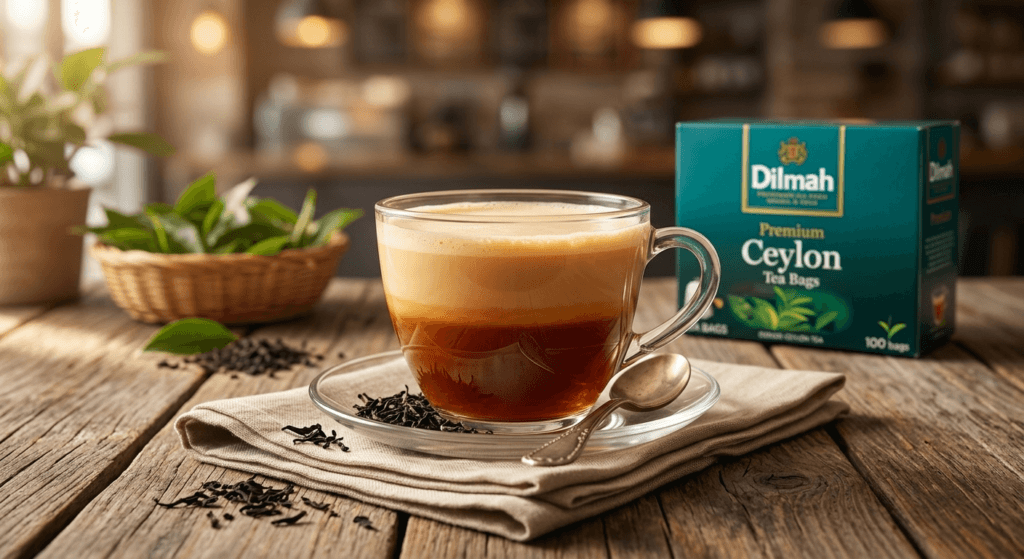
Ceylon Milk Tea: Why Dilmah Premium Is the Perfect Base
“Ceylon milk tea” searches are climbing +20%, reflecting renewed appreciation for this timeless preparation. Ceylon black tea is uniquely suited to milk — its bright, brisk character and natural astringency cut beautifully through the fat in milk, creating a balanced, full-flavoured cup that Assam can replicate but Darjeeling cannot.
How to Make Perfect Ceylon Milk Tea with Dilmah
- Bring fresh, cold water to a full rolling boil (95–100°C). Never use re-boiled water — it loses dissolved oxygen and produces a flat cup.
- Warm your cup or teapot first by filling with hot water, swirling, and discarding.
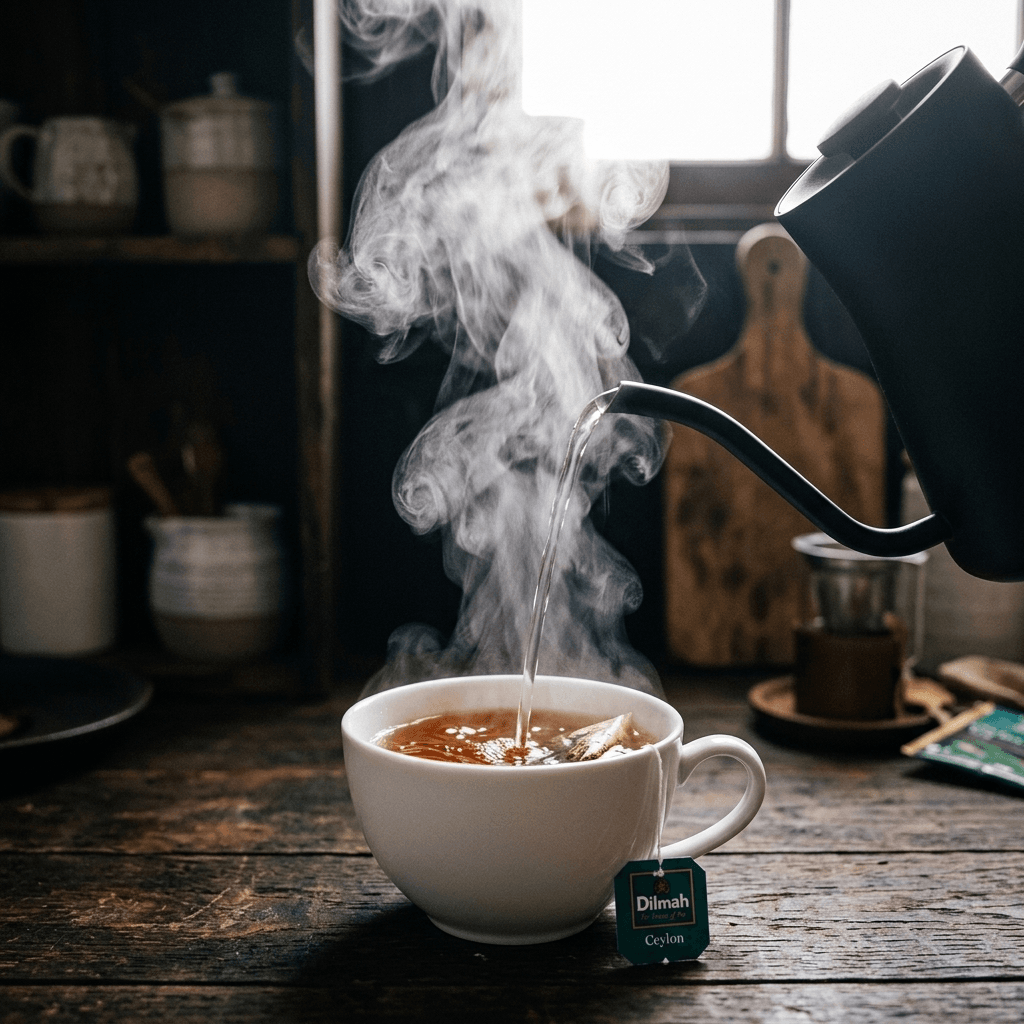
- Add one Dilmah tea bag to the warmed cup.
- Pour the boiling water directly over the tea bag.
- Steep for 3–4 minutes undisturbed — do not squeeze the bag, which releases bitter tannins.
- Remove the bag without squeezing. Add whole milk to taste — ideally warmed separately. Sweeten minimally if at all.
The result: a deep amber-red, full-bodied cup with a clean finish and none of the bitter edge that characterizes badly brewed or low-quality tea. This is Ceylon milk tea as it should taste.
The Perfect Brew: How to Make the Most of Every Dilmah Tea Bag
- Use Fresh Cold Water
Always start with fresh, cold, filtered water. The dissolved oxygen in fresh water is what gives Ceylon tea its characteristic brightness and sparkle. Re-boiled water produces a dull, flat cup regardless of tea quality.
- Boil to 95–100°C
Unlike green or white tea (which require lower temperatures), black Ceylon tea demands fully boiling or near-boiling water to properly extract its flavour compounds. Under-temperature water produces weak, under-extracted tea.
- Warm Your Cup First
A cold cup drops water temperature the moment you pour. Rinse with a splash of hot water and discard before adding the tea bag. This keeps your brew at the correct temperature throughout extraction.
- One Bag, 200ml, 3–5 Minutes
Dilmah’s 2g bags are sized for a standard 200ml cup. Steep for 3 minutes for a lighter cup, 4–5 minutes for full strength. Set a timer — guesswork produces inconsistent results. Do not stir or squeeze the bag while steeping.
- Remove Without Squeezing
Squeezing the tea bag forces the most bitter, over-extracted tannins from the bag into your cup. Lift the bag out cleanly and let it drain briefly before discarding. This single habit transforms the quality of every cup you brew.
- Add Milk, Lemon, or Honey — In That Order
If adding milk: add it after removing the bag (milk proteins interact with tannins during steeping and can cause cloudiness). If adding lemon: add last and keep the amount small — acid brightens flavour. Honey adds complexity; refined white sugar dulls it.
Why Dilmah? The Story Behind the World’s Most Ethical Tea Brand
Dilmah was founded in 1988 by Merrill J. Fernando — a Sri Lankan tea taster who spent decades watching his country’s finest tea leave as bulk commodity, be blended overseas, and be sold under foreign brand names at enormous profit. His mission was radical in its simplicity: sell Sri Lankan tea under a Sri Lankan name, keep the value in Sri Lanka, and give consumers the real thing.
The brand’s founding principle — “Tea is my way of life, and my way of giving” — is backed by the MJF Charitable Foundation, through which Dilmah has invested hundreds of millions in Sri Lankan community development, education, and environmental preservation. Buying Dilmah is not just buying better tea. It is directly supporting the communities that grow it.
Today, Dilmah is exported to over 100 countries and remains family-owned and Sri Lanka-rooted — one of the rarest things in the global food industry: a brand that actually means what it says.
Frequently Asked Questions
What is Ceylon tea and how is it different from regular black tea?
Ceylon tea is black tea (or green, white, or oolong) grown exclusively in Sri Lanka — formerly known as British Ceylon. It carries a protected geographical indication, like Champagne or Parmigiano-Reggiano. What makes it different from “regular black tea” is that regular supermarket black tea is typically a multi-country blend (India, Kenya, China, Sri Lanka) designed for consistency and low cost. Pure Ceylon tea like Dilmah is single-origin, with a distinct terroir character that blended tea cannot replicate.
How much caffeine does Dilmah Ceylon tea have?
Dilmah Premium Ceylon Tea Bags contain approximately 50–90mg of caffeine per 200ml cup, depending on brew time. A 3-minute steep produces around 50–60mg; a 5-minute steep extracts closer to 80–90mg. This is moderate-to-high for tea — less than most coffees, more than green tea. For lower caffeine, brew for 2 minutes or use the “short steep and discard” technique.
What are the health benefits of Dilmah Ceylon tea?
Research supports multiple benefits from regular black Ceylon tea consumption: cardiovascular protection via theaflavins and thearubigins, improved gut microbiome health, blood sugar regulation, sustained mental alertness through caffeine and L-theanine, antioxidant protection, and oral health support. These benefits are associated with 2–4 cups daily as part of a balanced diet.
Is Dilmah the best Ceylon tea brand?
Dilmah is consistently ranked among the top Ceylon tea brands globally and is unique in its commitment to single-origin, estate-picked, Sri Lanka-packed tea with no blending. For consumers who want guaranteed provenance, ethical sourcing, and the truest expression of Ceylon black tea in a tea bag format, Dilmah is the benchmark. Other premium Ceylon brands exist (Mlesna, Basilur, for example), but Dilmah’s global scale, traceability, and charitable mission make it the most trusted name in the category.
What is orange pekoe tea? Is Dilmah orange pekoe?
Orange Pekoe (OP) is a leaf grade designation, not a flavour or variety. It describes the size and style of the tea leaves. Dilmah Premium uses BOP (Broken Orange Pekoe) and BOPF (Broken Orange Pekoe Fannings) grades — the standard for quality tea bag blends, designed to brew a full-strength cup in 3–5 minutes. The term “orange pekoe” on tea packaging signals leaf-grade quality rather than dust-grade commodity tea.
Can I use Dilmah Ceylon tea bags for milk tea?
Absolutely — Dilmah Premium Ceylon is an ideal milk tea base. Its brisk, full-bodied character and natural astringency interact beautifully with milk, creating a balanced, classic cup. Brew the bag in boiling water for 4 minutes, remove without squeezing, then add warmed whole milk to taste. It also makes an excellent base for iced milk tea and bubble tea applications.
Where can I buy Dilmah Premium Ceylon Tea Bags online?
Dilmah Premium Ceylon Tea Bags (100 bags, 200g) are available at Zeylaan.com — a specialist Sri Lankan products store that ships authentic Ceylon goods to 28+ countries worldwide. Zeylaan sources directly and guarantees authentic product with full origin traceability.
Order Dilmah Premium Ceylon Tea Bags
100 bags · 200g · Pure single-origin Ceylon black tea · Ships to 28+ countries from Sri Lanka
Have Questions About This Product?
Need more details, bulk pricing, custom orders, or worldwide shipping information? Our team at Zeylaan is here to help.
🌐 Website: https://www.zeylaan.com
📧 Email: hello@zeylaan.com
📲 WhatsApp Support: +94 72 470 7185
🚚 Global Shipping Available
🔒 Secure Payments & Trusted Service
We are committed to transparent communication, authentic sourcing, and a smooth shopping experience from Sri Lanka to the world.
👉 Contact Zeylaan with confidence before you buy.